Saturday, April 28, 2007

Why China will stay the world leader (and not India)

The news is real - from none less than Reuters - but my title is tongue-in-cheek (so do not send me rants on my inability to see through 'deep underlying issues')

BEIJING (Reuters) - Chinese tourism authorities are seeking investment to build a novel concept attraction -- the world's first "women's town", where men get punished for disobedience, an official said on Thursday. The 2.3-square-km Longshuihu village in the Shuangqiao district of Chongqing municipality, also known as "women's town", was based on the local traditional concept of "women rule and men obey", a tourism official told Reuters.

An interesting perspective on the tradition/modernity debate. Here is the full story Read more!


Desperation in Delhi

Saw a film today, which is part of the EU film festival in Delhi that's currently on. Details of the film are below.

Name of Film : ‘Honey and Wine’
Year – 2006
Duration – 76 minutes
Director – Marinos Kartikkis
Synopsis
Eleni lives alone, haunted by memories of the past. Her life is a routine until she witnesses a quarrel between a young couple in the house across the street. One afternoon, Eleni receives an unexpected visit from Rhea, the young woman from the house across the street. She has locked herself out and needs to use Eleni’s phone in order to call a locksmith. And so begins a relationship between the two women with unforeseen consequences for them both.

Moving on from reel life to real life on a hot & torrid Saturday afternoon in Delhi proved a tough task for me. What struck me first as I hit the road outside British Council (where the film was screened) was not just the 40 degree celcius temparature. The film deals with a relationship - between two women who are neighbours. The striking feature for me in the film was the use of silence and silent spaces to convey a lot. Delhi, in contrast, is all about noise. People are aggressive, intrusive, loud and crass. A relationship between two women who help each other without intruding into each others private spaces is absolutely unimaginable. The Indian script is being played out globally in terms of gross domestic product, economic superpower and so much more. We have built huge malls which are supposedly as good as those in Dubai and Singapore - but in terms of evolving sociologically, we've still got a long way to go, at least in North India. All that I could think of as I watched the film was that this is so European and so alien here in Delhi. A story of two single women, both going through a painful phase in their life, far apart in age and yet helping each other out of a crisis. It's not like they're good friends or talk a great deal. In fact, at the outset, they're strangers. But as the plot moves on they come to mean a great deal for each other without intruding into each other's space. In Delhi, very often, the housing society where I live turns into a circus because someone has a wedding. What that means is that all the neighbours, are subjected to loud music and noise late into the nights and have to shift their cars from the usual parking slots. Even the electricity lines are sometimes tampered with and neighbouring buildings have to suffer long power cuts. People are not supposed to have any space to themselves and loud intrusions have to be dealt with without complaining. A wedding in the society is a cause celebre and obviously one doesn't complain to the police about rowdy behaviour. Even if you do, it's almost certain that no action is going to be taken. Even if some neighbours are helpful, they're also nosey and interfering. As for single women - they're just victims of circumstances - their singlehood!
Read more!


Friday, April 27, 2007

Top news from India: April 2007

Top News:

  • A1 and A2 to get married (A1 allegedly for the fourth time)
  • A1 and A2 get married
  • A1 and A2 blink

Economic News:
  • A1 and A2 get married (A1 allegedly for the fourth time)
  • Indian economy reaches $1 trillion mark
  • Monetary policy announced


Political News:
Lalu making mockery of himself: Nitish
Rahul Gandhi, son of Sonia Gandhi, gransdson of Indira Gandhi and brother of Priyanka Vadra puts foot in mouth (again)
Serious issues emerge with respect to higher education


Entertainment News:
A1 and A2 ......


World News from Indian media:
Gere sorry, Shetty consulting Martha Stewart on the economic value of incarceration
A1 and A2 leave for honeymoon (for the first time)


Top events in India:
Indian media holds workshop on how to report on a private wedding
Big B book launch "How to use the media and then blame it"; venue Press Club; no media please


Newsflash: (allegedly, exclusive rights to this story were sought by media outlets at an unknown price)

Indian man and Indian woman got married; both families were present; close friends and relatives were invited; religious rites were performed and there was chaos all around; bride and groom were dressed in traditional (but unusually tasteless) garb and looked somewhat exhausted throughout the ceremony.
Read more!


Searching for a namesake?

The Telegraph, Calcutta, (April 15, 2007) recently published an interview with well known novelist, critic and poet David Dabydeen while he was visiting India. He has stated thet he wanted to name his son Ganesh in a Hindu ceremony; last year, he had been named Ganpati at a temple in Tirumala. It was intriguing to me that Dabydeen who teaches at the University of Warwick and directs their Caribbean Studies Centre and who has gone on record saying that he is comfortable with the concept of England as home would want such a rite of passage for his son. David Dabydeen was born in British Guyana and travelled to England when he was 13 where he has lived ever since. If on the face of it, his connections to India had seemed tenuous, his given name for his son and the choice of naming ceremonies made me think again. It highlighted all those questions about identity in another context. What does it mean for David Dabydeen to be Guyanese and British and how is his Indian heritage connected to all of these plural identities? If identity is a name given to the process of positioning ourselves in the narratives of the past, then Dabydeen’s quest for identity seems to be linked not only with the name of his grandfather, but almost in a reverse move, with the name and naming of his son. He has, in order to excavate a history for himself, associated his past with his future.

>Dabydeen’s actual search for his ancestral name has drawn a blank. What he has discovered is that his grandfather sailed from Calcutta as indentured labourer on the ship SS Appollinaire (ironic connotations of reaching for the moon?). He tried to google his grandfather’s caste but to no avail. Dabydeen has to be satisfied with conjectures that his name is probably an oral distortion and cannot be traced now. So here he is, with an Indian heritage that cannot even be substantiated beyond a point. Gogol in Jhumpa Lahiri’s The Namesake felt burdened by the name of a literary genius. Dabydeen, with more literary credits to his name -- he is the only West Indian other than Sir V.S. Naipaul to be awarded the title of Fellow of the Royal Society of Literature -- can merely talk about an empty space that he has inherited. Gogol could come back to Calcutta and re-connect with a history and a language that was still accessible to him. But Dabydeen admits to feeling discomfort in India where he does not understand the language; in Guyana he feels like an expatriate who lives in a hotel. So, in this history, twice removed, how do David Dabydeen and other Caribbeans of Indian descent insert themselves? It is not a history that can assert itself through daily rituals or through language or even daily customs. How does one connect to a history that is taking place elsewhere and can only be made accessible to you through memories – other people’s memories?

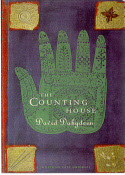
In literary terms, Dabydeen has tried giving a voice to the silence and the silencing of his ancestors. In The Counting House, the young couple Rohini and Vidia, troubled by caste prejudices in rural India, are easily tempted and misled by the recruiter’s promises of plenty. The reality in British Guiana is a stark contrast where the local population is hostile and life as a coolie is hard. The promised El Dorado is conflicted territory barely emerging from practices of slavery. Even more poignant is his epic poem, Turner based on the acclaimed painting of J.M.W Turner – “Slavers Throwing Overboard the Dead & Dying.” Reading it while negotiating my life as a student in the U.S., I had found it extraordinarily powerful. In this moving poem, Dabydeen, re-writes a history for the drowning slave, articulating his covert desires; his peculiar amnesia does not however, allow him to create an idyllic past for himself as he can still recognize himself as “a nigger.” The dual themes of alienation and the inescapable burden of history run through Dabydeen’s works.


Growing up in British Guiana, the only English speaking place in South America, was an alienating experience. They were separated from the other Caribbean countries, if not by language, certainly by the rainforest topography. He remembers celebrating Diwali and being members of the Anglican Church. But identity is never a source of comfort – he was ashamed of his Hindu name and of women wearing saris and speaking in Urdu. Cultural identities are continuously re-made and never essentialist and David Dabydeen’s journeys vindicate that. He has obviously travelled a long way from that shame. His ancestors’ homeland has conferred upon him the Hind Rattan Award and he was invited to Delhi to receive it. He, in turn, has not taken any easy short cuts. I mean, he could have named his son Peter or Martin and be done with it. It would be easier certainly because everyone around us seems to be saying that national identity is passé in the age of globalization. It is one thing to impart history to a literary creation and another thing to try and reclaim a past for your child who can turn around and question your motives. Courageously, Dabydeen forges a link to his past that connects the personal, political and the representational. Read more!


Tuesday, April 24, 2007

Tongues on Fire

Tongues on Fire, an Asian film festival that showcases women as directors and/or protagonists, celebrated its 9th anniversary in London in March this year. It was an exciting array of films, documentaries, short film competitions as well as panel discussions that included Q & A sessions. The show ended with a special tribute to the Bollywood legend Helen. (In the past years the festival has paid special tribute to Shabana Azmi and Aparna Sen.)

In naming the festival, Chowdhry and Nath have chosen an interesting if neutral name for their cultural production. They felt that some people would not even pick up the brochure if they named it as specifically female and Asian. Like the hosts of Voices of Bengal (an exhibition of Bengali culture and heritage hosted by British Museum in 2006), they wanted to woo the mainstream audience. Asian women were there at all the venues but all such exhibitions eventually need to co-opt the dominant culture. Speaking from the margins is fine, but the margins need to converge on to the main text and the main text needs to be revised and moderated by the nuances of the marginalia. Only then can new and dynamic dialogues be set up and we can even begin to speak of a genuine move towards globalization. Chowdhry and Nath, intend not only to resist the stereotype of their gender and race as down-trodden, subservient and devoid of personality but also to offer an alternative perspective.

If the festival directors Pushpinder Chowdhry and Harvinder Nath were aiming at bringing together an eclectic body of work, they certainly succeeded. The month long season opened with screening of The Namesake directed by Mira Nair; the festival also marked the premiere of Oscar nominated Water directed by Deepa Mehta. The Namesake drew fairly large audiences particularly young, discerning British Asians who I hope, could identify more with Gogol in The Namesake rather than Jas in Namastey London (a typical Bollywood masala film also running in theatres at the same time). Jhumpa Lahiri’s story, sensitively re-told by Nair, touched a chord in the older group of immigrants who left their homeland in the sixties and seventies and had to re-make themselves in strange lands.

There were previews of Provoked, directed by Jag Mundhra, starring Aishwarya Rai (oops Bachchan), Naveen Andrews, Miranda Richardson, and of another film with the intriguing tag line, ‘Everyone has something to hide.’ Hiding Divya is a powerful film about three generations of women, mother, daughter and granddaughter woven together by love, rebellion, mistrust and mental illness. Another film to watch out for is Pratibha Parmar’s Nina’s Heavenly Delights. A delightful comedy about a mixed race marriage and a lesbian relationship, this film is shot in U.K. Using elements from her own life, Parmar delves into issues of sexuality, friendship, food and tops it up with a rich sprinkling of Scottish humour.

No More Tears Sister & Of Such Times (The Modern Indian Woman) were also screened at the festival. The former is a must-see, set in Sri Lanka and based on the life of well known human rights activist, Dr. Rajani Thiranagama. Dor, directed by Nagesh Kukunoor was a pleasant surprise. The star cast of Gul Panang and Ayesha Takia seemed to indicate Bollywood flavoured pubescent love stories. But the ties of friendship between two women that develops at a critical juncture in their lives and across class lines signals exciting possibilities in women’s cinema coming out of India. Technical aspects of the film including photograph were brilliant.

Tongues on Fire, offers an opportunity, not only to watch the poignant films of today but also to meet the stars. For upcoming students of cinema, it offers a platform to demonstrate their potential. Together the screenings and the events convey a sense of creativity, intellectual depths, technical maturity and production finesse. Overall the festival exudes vibrance and a taste of things to come – we are here, Tongues on Fire seems to say, we the Asians and British-Asians and most importantly, we the women who have things to say and know how to say them.
Read more!


Monday, April 23, 2007

Mistresses of spices rock the Big Apple

It's good to see Bengali girls running great businesses in NYC. And this is not just an expression of parochial pride but also puts paid to the theory that the Bengalis usually lack the entrepreneurial gene. There's Kolkatan Payal Saha (right) who has taken the famous kati roll from Kolkata streets to Manhattan in 2000. Her Kati Roll Company outlets at NYC's Greenwich Village and Times Square are popular not just with South Asians but also Manhattan's maintream foodies! Then there's Nandini Mukherjee (left), an architect, who runs Indian Bread Company – a very successful restaurant in Manhattan.

Saha herself feels that the ubiquitous Kati Roll works for many different segments. "We see a lot of traffic during lunch and dinner and there's a steady flow all day of people looking to snack. And then there's the crowd looking for their after-drink munchies," she says.

Saha wanted to take Kolkata cuisine to Manhattan where she felt that mainly North Indian cuisine had come to be identified with India. "The idea of kati rolls was simple and quick and the idea was to cash in on the fast pace of Manhattan," she says. Kati Roll Company's menu has paneer and aloo rolls as the vegetarian options and chicken and beef as non-vegetarian. There's also a separate egg roll and egg as an add-on with chicken, beef and aloo while one of the outlets has Shammi kebab rolls.

Then there's Nandini Mukherjee, an architect who's originally from Jamshedpur, who runs Indian Bread Company – a very successful restaurant in Manhattan. She went to NYC for a masters degree in architecture and took on the challenge of creating her own business from scratch – a 9-5 job in an architectural firm was not for her! As a student she found the Indian food that Manhattan had to offer to be either very disappointing of too expensive. "I realised that there was a market gap for fresh and take away Indian food at a reasonable price. That's how the idea took shape and Indian Bread Co opened its doors in November 2003," she says. Indian Bread Company which is located on Bleecker Street near New York University serves an innovative menu comprising four different types of sandwiches - stuffed parathas, kathi rolls, Naanwiches (Naan pocket sandwich) & Naaninis (Naan grilled sandwich). U sing Indian breads filled with popular Indian fillings to form a 'curry-on-thego' sandwich meal – as Mukherjee herself likes to put it.

One of Indian Bread Co's biggest successes was being selected to cater for the 2004 RNC Media Welcome reception thrown by Mayor Bloomberg, Governor Pataki and Former Mayor Giuliani. "The event planner said that she was attracted by our novel concept and delicious food. The event celebrated the best of New York in food and cuisine. Not only were we the only South Asian restaurant, we were among the 20 places chosen to showcase New York as the culinary capital of the world. It was an honor and I was overjoyed by the overwhelming positive response. There were literally 3 floors of food and 2000 attendees; with each restaurant having a couple of tables to showcase their items. We served mini naaninis & kathi roll bites. As soon as people would taste the food, they'd immediately call their friends on their cell-phones to come over to our tables from wherever they were located at the venue. Unsurprisingly, we were the first to run out of food, in spite of stocking more than double the planned quantity. Planning and managing this event helped me gain more confidence in my managing and leadership abilities," says Mukherjee.

Being an Indian immigrant has rarely deterred Mukherjee who feels it often gives her company certain advantages. "It gave our company a minority owned & women owned business status, which made us entitled to certain privileges. Many corporations have 'supplier diversity programs' and set aside millions of dollars in vendor and procurement contracts to small businesses that have been certified as minority- or woman-owned," says Mukherjee who has recently won the prestigious Make Mine a $Million business programme which awards a combination of money, mentoring, marketing and technology tools that women entrepreneurs need to help grow their businesses from micro to $millions. Every year they have women entrepreneurs from all over the USA apply, out of which they choose 20 finalists. The 20 finalists then pitch their business live in front of a panel of judges and an audience, who then cast their votes to select 8 winners.

"Make Mine A Million in itself is a huge network of women entrepreneurs, and it's growing everyday. Besides, having varied interests, I meet many people from different fields whom I interact and network with. As such, I haven't joined any Indian American entrepreneurial networks, though I've attended various seminars held by Indian American entrepreneurial groups," says Mukherjee.
Read more!


Wednesday, April 18, 2007

The curious habits of man

Ezra Pound wrote:

.. When I carefully consider the curious habits of dogs
I am compelled to conclude
That man is the superior animal.

When I consider the curious habits of man
I confess, my friend, I am puzzled...
The last few days, we have had ample opportunity to study the "curious habits of man" in the USA.As if we did not have enough to discuss in terms of unprecedented Afro-American and women Presidential candidates, disastrous wars, international isolationalism, corrupt World Bank presidents and collapsing real estate prices !

All these topics were wiped out by a roughneck radio talk host called Don Imus and his description of young, female, black athletes as "nappy-headed ho's". For those of us who had no idea what that expression meant, we were subjected to an analysis ad infinitum of every nuance of those words. Apparently it was a disparagement of black women, a phrase coined by African Americans themselves as part of hip-hop culture. As the whole world knows by now, Don Imus has been fired by his media employers CBS and CNBC. The firing has drawn battle lines between two groups - the defenders of free speech on the one hand, and the advocates of Political Correctness on the other. They both miss the point, which is that Don Imus was paid to be outrageous, because that's what we, the People wanted. And we, the People wanted it so badly that corporate America, represented by the likes of American Express, Procter & Gamble and Coca-Cola paid CBS megabucks in the way of sponsorship, reveling in the publicity that he earned from a long litany of outrageous ethnic and tasteless slurs. Yes, he was paid to say these things as long as the ratings came in - and paid not just in hundreds of thousands, but.... (wait for it)..... 10 MILLION DOLLARS A YEAR ! And he was ultimately fired by the networks, many days after his remarks, only because the sponsors pulled their money. It wasn't good taste that ultimately won, it was just market forces. Don Imus was no longer good for detergent sales.

We thought the Don Imus story would never end, but of course it did run out of steam. However, no sooner had the networks stopped coverage on that burning issue, the Virginia Tech shooting hit the news waves. And, somewhat predictably, amongst the outpouring of grief for the loss of life, the hoary issue of Gun Control came to the forefront again. Oh yes, we were told once again .." It's not guns which kill people, it's people who kill people.." Surely that's true as far as it goes, ignoring the obvious fact that without guns people would find it just that little bit more difficult to kill. It takes more effort to bludgeon someone to death than just pull a trigger, but hen we run into the objection that the U.S. Constitution is supposed to guarantee the "..right to bear arms.." But does it ? The Second Amendment to the Constitution reads "..A well regulated militia being necessary to the security of a free State, the right of the People to keep and bear arms, shall not be infringed..."

Anybody with a credit card being able to buy lethal weapons couldn't be further from the concept of a "..well regulated militia.."

Surely the Constitution needs updating, after all there have been twenty-seven amendments to that august document, including the abolition of slavery. But no, we will continue to prove that Ezra Pound was right to be puzzled.
Read more!